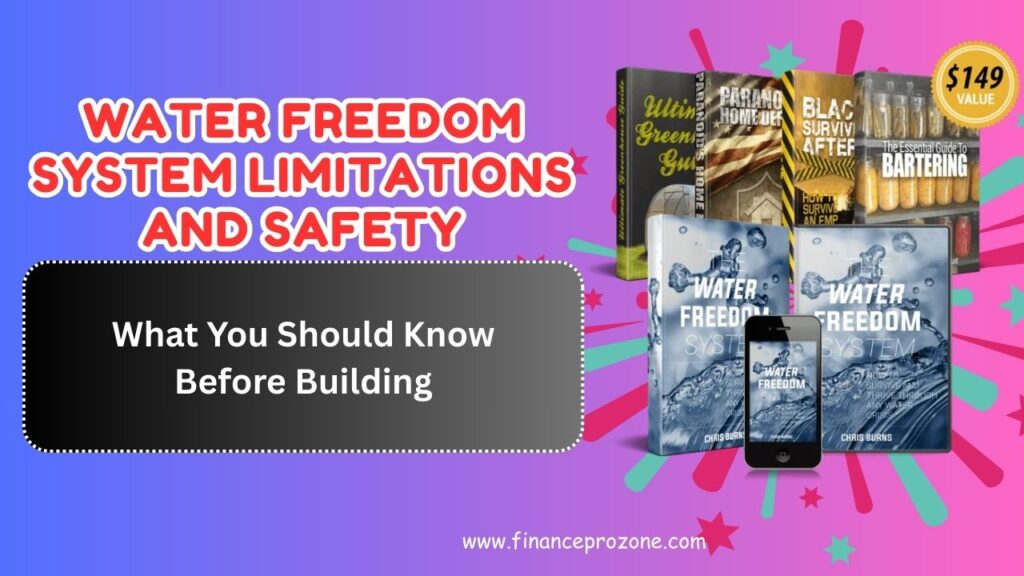
Water Freedom System Limitations and Safety: What You Should Know Before Building
Thinking about building your own Water Freedom System but want to understand the potential downsides before you start? While the idea of generating your own water is exciting, it’s just as important to know what limitations you might face—and what safety considerations you should take seriously before investing time and resources.
In this honest 2026 guide to Water Freedom System limitations and safety, we’ll walk you through the realistic challenges you could encounter during setup and long‑term use, along with key safety issues like structural integrity, water quality risks, and maintenance concerns. Whether you’re a DIY enthusiast or prepping for off‑grid living, this overview will help you plan smarter and avoid costly or dangerous mistakes before you begin building.
👉 Don’t wait — Order Water Freedom System Now from the Official Website
Understanding the Purpose of the Water Freedom System
The Water Freedom System is a digital blueprint, not a commercial appliance. It teaches users how to build a DIY setup that captures moisture from the air and converts it into usable water.
Its purpose is to:
- Provide supplemental drinking water
- Improve emergency preparedness
- Support off-grid or semi-off-grid lifestyles
- Reduce dependence on bottled water
It is not intended to fully replace:
- Municipal water systems
- Wells
- Large-scale rainwater harvesting
Many safety and performance concerns come from misunderstanding this core purpose.
👉 Don’t wait — Order Water Freedom System Now from the Official Website
Major Limitations You Should Know Upfront
1. Climate and Humidity Limitations
Atmospheric water harvesting depends entirely on water vapor in the air.
This means performance varies widely based on:
- Relative humidity
- Ambient temperature
- Air circulation
- Time of day
Best Conditions:
- Humid or coastal regions
- Warm environments with nighttime cooling
- Areas with natural airflow
Poor Conditions:
- Desert or arid climates
- Cold, dry winter air
- Sealed indoor rooms with low humidity
In low-humidity environments, water output may be minimal. This is a physical limitation, not a design flaw.
2. Limited Water Volume
The Water Freedom System is designed for small-scale water generation.
Typical realistic uses include:
- Drinking
- Cooking
- Emergency hydration
It is not suitable for:
- Showers or bathing
- Laundry
- Irrigation
- Full household plumbing
Users who treat it as a backup or supplemental source are generally satisfied. Those expecting household-level output are often disappointed.
3. DIY Build Quality Affects Results
Because this is a DIY system:
- Assembly accuracy matters
- Material choices matter
- Placement matters
Small mistakes—such as incorrect angles, poor drainage, or improper materials—can significantly reduce performance or create safety issues.
The system works best when users:
- Follow instructions closely
- Avoid shortcuts
- Resist unnecessary modifications early on
4. Ongoing Maintenance Is Required
This is not a maintenance-free system.
Routine upkeep includes:
- Cleaning condensation surfaces
- Checking collection pathways
- Maintaining filtration components
- Cleaning and rotating storage containers
Without maintenance, issues may arise such as:
- Reduced condensation efficiency
- Water contamination
- Odor or taste problems
Maintenance is especially important in dusty or off-grid environments.
Safety Considerations You Should Never Ignore
1. Water Purification Is Essential
While atmospheric water starts relatively clean, it can become contaminated by:
- Dust
- Airborne pollutants
- Surface residue
For safety:
- Always filter collected water
- Use activated carbon filters where possible
- Consider boiling or UV treatment for drinking water
Never assume unfiltered water is safe for long-term consumption.
2. Use Only Food-Grade Materials
All parts that contact water must be safe for potable use.
Recommended materials:
- Food-grade plastic
- Stainless steel
- Glass
Avoid:
- Unknown plastics
- Repurposed containers not rated for drinking water
- Materials that may leach chemicals
This is one of the most important safety steps—and one of the most commonly overlooked.
3. Preventing Bacterial Growth in Storage
Collected water can become unsafe if stored improperly.
Best practices include:
- Cleaning containers regularly
- Avoiding long-term stagnant storage
- Storing water in cool, shaded areas
- Rotating stored water frequently
Good hygiene is critical for water safety.
4. Electrical Safety (If Adding Enhancements)
Some users add optional enhancements such as:
- Fans
- Cooling elements
If electricity is involved:
- Use low-voltage components
- Protect wiring from moisture
- Avoid unsafe DIY electrical connections
For many users, passive systems are safer and more reliable, especially off-grid.
5. Structural and Physical Safety
An unstable setup can lead to:
- Water spills
- Damage to components
- Safety hazards in living spaces
Ensure:
- Stable mounting
- Proper drainage angles
- Secure frames or supports
A safe build is also a more efficient build.

Common Mistakes That Lead to Problems
Many negative experiences come from preventable errors:
❌ Expecting instant, unlimited water
❌ Skipping filtration steps
❌ Using non-food-grade containers
❌ Poor system placement
❌ Ignoring cleaning and maintenance
Understanding these pitfalls beforehand greatly improves both safety and satisfaction.
Who Should Think Carefully Before Building
The Water Freedom System may not be ideal if you:
- Live in extremely dry climates
- Need large daily water volumes
- Want a fully automated solution
- Are unwilling to perform routine maintenance
In these cases, commercial atmospheric generators or alternative water solutions may be more appropriate.
Who the System Is Well-Suited For
Despite its limitations, the system works well for:
- Emergency preparedness planners
- Off-grid or rural households
- DIY-friendly homeowners
- People seeking backup drinking water
- Those wanting to reduce bottled water use
When used correctly, it adds resilience and flexibility.
Setting Realistic Expectations Before You Build
Successful users share one common mindset:
“This system increases my options—it doesn’t replace everything.”
If you approach the Water Freedom System as:
- A backup
- A learning tool
- A preparedness asset
you’re far more likely to view it as valuable.
👉 Don’t wait — Order Water Freedom System Now from the Official Website
Final Verdict: Know the Risks, Build Smart, Stay Safe
The Water Freedom System is not dangerous, but it does require responsibility.
Its limitations are real:
- Climate dependence
- Moderate output
- DIY effort
Its safety depends on:
- Proper filtration
- Clean, food-grade materials
- Regular maintenance
When built thoughtfully and used within its intended scope, the system can be a safe, practical addition to your water strategy in 2026.
Bottom Line
If you understand the limitations, follow safety best practices, and treat the Water Freedom System as a supplemental solution—not a miracle replacement—it can deliver meaningful value and peace of mind.
👉 Don’t wait — Order Water Freedom System Now from the Official Website