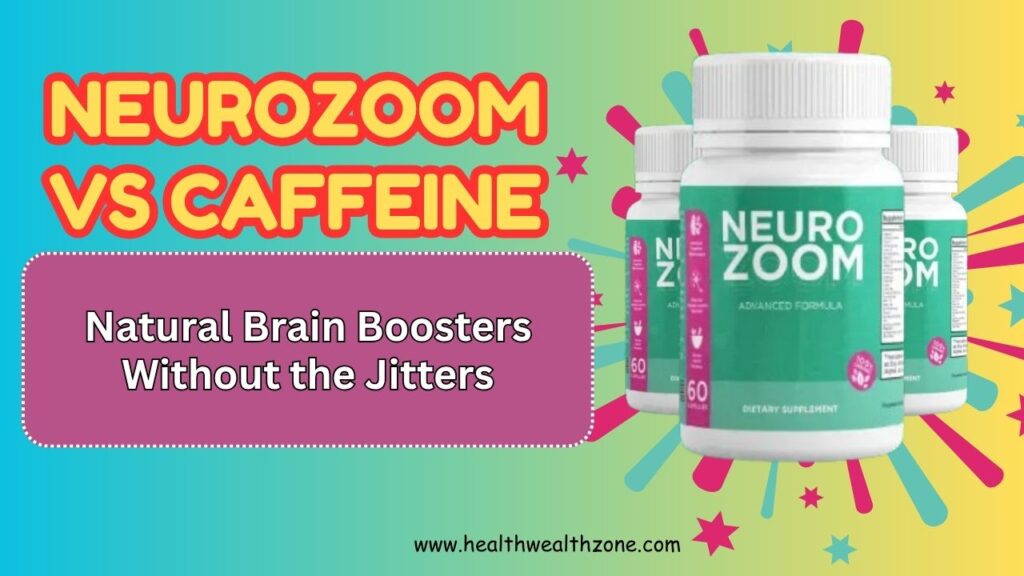
NeuroZoom vs Caffeine – Natural Brain Boosters Without the Jitters
We’ve all heard about quick fixes for focus and clarity — but when it comes to boosting brain power, is there a real difference between a pill and a cup of coffee? “NeuroZoom vs Caffeine: Natural Brain Boosters Without the Jitters” explores exactly that tension. Both promise sharper thinking and mental energy — but which delivers sustainable cognitive support without the crash or jittery side effects?
In this head-to-head comparison, we’ll break down how NeuroZoom and caffeine work, dig into their ingredients, evaluate user experiences (and potential downsides), and help you decide which option — if either — could be the smarter, safer pick for boosting brain power.
👉 Don’t wait — Order NeuroZoom Now from the Official Site
What Is NeuroZoom?
NeuroZoom is a comprehensive brain health supplement designed to support:
- Memory recall and retention
- Mental clarity and sharper focus
- Long-term cognitive performance
- Stress resistance and calm thinking
It contains 35 natural ingredients including Bacopa Monnieri, Huperzine A, Ginkgo Biloba, DMAE, antioxidants (vitamin C, E, selenium), amino acids, and herbal extracts.
Unlike caffeine, which is a single stimulant compound, NeuroZoom works on multiple brain pathways:
- Enhancing neurotransmitters
- Improving blood circulation
- Protecting neurons with antioxidants
- Supporting stress resilience
✅ Key Difference: NeuroZoom is stimulant-free and designed for long-term cognitive health, not just short-term energy.
👉 Don’t wait — Order NeuroZoom Now from the Official Site
What Is Caffeine?
Caffeine is a natural stimulant found in coffee, tea, chocolate, and energy drinks. It works by blocking adenosine receptors in the brain — the chemicals that make you feel drowsy. This increases alertness, reaction speed, and concentration.
Benefits of caffeine include:
- Quick mental boost within 20–30 minutes
- Increased alertness and reduced fatigue
- Enhanced physical performance (popular among athletes)
Drawbacks of caffeine include:
- Short-lived effects (3–5 hours)
- Jitters, anxiety, or rapid heartbeat in sensitive individuals
- Post-caffeine “crash” leading to fatigue
- Tolerance and dependency with long-term use
✅ Key Difference: Caffeine is effective but comes with side effects and diminishing returns over time.
Ingredient Comparison: NeuroZoom vs Caffeine
| Factor | NeuroZoom | Caffeine |
|---|---|---|
| Number of ingredients | 35 natural compounds (herbs, antioxidants, vitamins, amino acids) | 1 stimulant compound |
| How it works | Improves neurotransmitters, blood flow, stress resilience, and neuron protection | Blocks adenosine receptors, increases dopamine and adrenaline |
| Duration of effect | Long-term cognitive support (weeks to months) | Quick burst (3–5 hours) |
| Side effects | Mild (digestive discomfort, headache in rare cases) | Jitters, crash, insomnia, increased heart rate |
| Dependency | No addictive stimulant | Can cause tolerance and withdrawal |
| Focus on brain aging | Yes — antioxidants and neuroprotective herbs | No — primarily short-term stimulation |
✅ Verdict: Caffeine gives a quick lift, while NeuroZoom focuses on sustainable brain health without jitters.
How NeuroZoom Works vs Caffeine
NeuroZoom’s Mechanism
- Memory Support – Bacopa Monnieri and Huperzine A enhance acetylcholine, crucial for memory.
- Circulation Boost – Ginkgo Biloba and olive leaf extract support healthy blood flow to the brain.
- Antioxidant Protection – Vitamins C & E, green tea extract, and selenium defend against oxidative stress.
- Stress Resistance – Adaptogens help calm mental fatigue.
Caffeine’s Mechanism
- Blocks adenosine, the “sleepiness” molecule.
- Increases dopamine and adrenaline, leading to alertness.
- Boosts reaction speed, mood, and focus — temporarily.
✅ Verdict: Caffeine is a fast-acting stimulant, while NeuroZoom is a long-term brain support system.
Benefits Comparison: NeuroZoom vs Caffeine
Benefits of NeuroZoom
- Improves memory and recall
- Reduces brain fog
- Supports long-term brain health
- Enhances focus without overstimulation
- May slow cognitive decline with age
- No risk of jitters or crash
Benefits of Caffeine
- Quick energy and alertness
- Improved reaction times
- Temporary mood lift
- Boosts workout performance
✅ Verdict: If you need a short-term pick-me-up, caffeine is effective. For consistent cognitive support, NeuroZoom wins.
Side Effects & Safety
NeuroZoom
- Generally safe and well-tolerated
- Possible mild side effects: digestive discomfort, mild headache
- Not addictive
- Safe for long-term use when taken as directed
Caffeine
- Can cause jitters, rapid heartbeat, and anxiety
- May interfere with sleep (especially if consumed late in the day)
- Can lead to tolerance → requiring higher doses for the same effect
- Withdrawal symptoms: headaches, irritability, fatigue
✅ Verdict: NeuroZoom is safer for long-term brain health. Caffeine can be safe in moderation but carries more short-term risks.
Customer Experiences: NeuroZoom vs Caffeine
NeuroZoom Users Say:
- “I feel sharper and more focused without the caffeine crash.”
- “My memory has improved after consistent use.”
- “It’s subtle at first, but after a few weeks, the difference is noticeable.”
Caffeine Users Say:
- “Coffee keeps me awake but gives me jitters.”
- “Energy drinks help me focus, but I crash hard later.”
- “I can’t function without my morning coffee.”
✅ Verdict: Caffeine delivers instant effects, but NeuroZoom provides sustainable improvements.


Pricing & Value
NeuroZoom
- Single bottle: around $79
- 3-bottle package: discounted per unit
- 6-bottle package: biggest savings + bonuses
- Backed by a money-back guarantee
Caffeine
- Coffee or energy drinks cost a few dollars per serving
- Affordable but requires daily, repeated use
- No long-term brain benefits
✅ Verdict: Caffeine is cheaper short-term, but NeuroZoom is a better long-term brain investment.
Pros & Cons: NeuroZoom vs Caffeine
NeuroZoom Pros
- 35 natural ingredients for memory, focus, and clarity
- No jitters or crashes
- Supports long-term brain health
- Non-addictive, stimulant-free
- Money-back guarantee
NeuroZoom Cons
- Higher upfront cost
- Slower results compared to caffeine
Caffeine Pros
- Quick boost in energy and focus
- Affordable and widely available
- Boosts workouts and performance
Caffeine Cons
- Jitters, crashes, and anxiety
- Can cause dependency
- No long-term cognitive protection
Final Verdict: Which One Is Better?
So, which is better — NeuroZoom or caffeine?
- If you want a quick, short-term energy spike, caffeine is effective but comes with side effects.
- If you want consistent focus, memory support, and long-term brain health without jitters, NeuroZoom is the better choice.
✅ Bottom Line: Use caffeine for temporary energy, but consider NeuroZoom if you’re serious about sustained brain performance and protection against aging.
👉 Don’t wait — Order NeuroZoom Now from the Official Site
Where to Buy NeuroZoom Safely
To avoid counterfeit supplements, buy only from the official NeuroZoom website. You’ll get:
- Authentic product
- Access to bundle discounts
- Money-back guarantee
Conclusion
Caffeine may be the world’s most popular brain booster, but it’s not perfect. While it provides fast energy, it also brings jitters, crashes, and tolerance issues.
NeuroZoom, on the other hand, is designed for balanced, long-term cognitive support with no addictive stimulants. For those looking to protect their memory, improve focus, and maintain clarity as they age, NeuroZoom is a smarter choice than caffeine alone.
👉 Don’t wait — Order NeuroZoom Now from the Official Site