Vision 20 vs Other Eye Supplements – What Sets It Apart in 2026?
Struggling with blurry vision, digital eye strain, or concerns about maintaining healthy eyesight? Vision 20 is drawing attention as a modern eye supplement that promises to support vision naturally, without harsh chemicals or risky treatments. But how does it really compare to the many other eye supplements available in 2026?
In this detailed Vision 20 review, we’ll examine its ingredients, user experiences, potential side effects, pricing, and most importantly—what truly sets it apart from other eye health products on the market.
👉 Don’t wait — Order Vision 20 from the Official Site
What Is Vision 20?
Vision 20 is a dietary supplement developed by Zenith Labs, designed specifically to protect against oxidative damage, blue light exposure, and age-related eye decline.
Its formula is built on antioxidant-rich carotenoids and supporting nutrients that target the root causes of vision problems, rather than just masking symptoms.
Core Benefits of Vision 20:
- Supports sharper vision and reduced eye strain.
- Helps protect against blue light damage.
- Improves night vision and glare recovery.
- Provides long-term retinal support against age-related decline.
But how does it stack up against other well-known supplements like PreserVision AREDS 2, Ocuvite, and Lutenol? Let’s compare.
👉 Don’t wait — Order Vision 20 from the Official Site
Vision 20 vs PreserVision AREDS 2
PreserVision AREDS 2 is one of the most widely recommended eye supplements, backed by the NIH’s Age-Related Eye Disease Study (AREDS). It’s designed primarily for people with Age-Related Macular Degeneration (AMD).
Similarities:
- Both contain lutein and zeaxanthin, carotenoids essential for macular protection.
- Both include zinc and Vitamin E, crucial for eye health.
Key Differences:
- Vision 20 includes additional antioxidants like lycopene, bilberry extract, and grape seed extract — compounds missing in AREDS 2.
- AREDS 2 contains high-dose Vitamin C (500 mg), which Vision 20 doesn’t emphasize.
- Target audience: PreserVision is mainly for individuals already at risk of moderate-to-severe AMD, while Vision 20 is formulated for wider eye protection, including blue light and digital strain.
✅ Verdict: If you’re primarily concerned with AMD, PreserVision is a solid choice. But if you’re looking for all-around eye protection in 2026, Vision 20 is more versatile.
Vision 20 vs Ocuvite
Ocuvite, made by Bausch + Lomb, is another long-standing eye supplement brand that comes in several variations (Ocuvite Adult 50+, Ocuvite Blue Light, etc.).
Similarities:
- Both provide lutein and zeaxanthin.
- Both target blue light protection.
Key Differences:
- Vision 20 offers a more complete antioxidant blend, including beta-carotene, taurine, bilberry, and grape seed.
- Ocuvite formulas often contain lower doses of key nutrients, making them more of a basic daily eye vitamin.
- Ocuvite is usually less expensive but lacks the comprehensive nutrient diversity that Vision 20 provides.
✅ Verdict: Ocuvite is a good budget option for general eye support, but Vision 20 is better if you want stronger, clinically aligned protection against multiple vision threats.
Vision 20 vs Lutenol
Lutenol is a modern eye health supplement that shares similarities with Vision 20, especially in its carotenoid profile.
Similarities:
- Both contain lutein, zeaxanthin, zinc, and Vitamin A.
- Both claim to support blue light protection, macular health, and long-term eye function.
Key Differences:
- Vision 20 includes lycopene, bilberry, and grape seed extract, making it stronger in terms of antioxidant defense.
- Lutenol often combines with more general vitamins, making it closer to a multivitamin + eye formula, while Vision 20 is more specialized.
- Customer trust factor: Vision 20 comes from Zenith Labs, a recognized supplement company with a reputation for transparency and clinical quality.
✅ Verdict: Lutenol is solid, but Vision 20 provides more targeted antioxidant support specifically for vision and eye strain.
Vision 20 vs Generic Eye Vitamins
Many drugstore or online retailers sell generic eye vitamins that claim to improve vision. These often include just Vitamin A, Vitamin C, and sometimes lutein.
Limitations of Generic Brands:
- Often underdosed in key nutrients like lutein or zinc.
- May lack premium ingredients like bilberry or grape seed extract.
- Little to no clinical backing or transparency.
✅ Verdict: Vision 20 clearly outperforms generics with its science-backed, multi-nutrient formula.


Ingredient Breakdown: What Sets Vision 20 Apart
The secret to Vision 20’s effectiveness lies in its diverse ingredient profile, which goes beyond the basics.
Vision 20 Key Ingredients:
- Lutein & Zeaxanthin – Protect against blue light and oxidative stress.
- Beta-Carotene & Vitamin A – Improve night vision and overall eye function.
- Zinc – Helps transport Vitamin A to the retina.
- Bilberry Extract – Enhances circulation to the eyes and reduces strain.
- Grape Seed Extract – Antioxidant powerhouse for vascular and retinal health.
- Lycopene – Fights oxidative damage, particularly in the retina.
- Taurine – Provides protection for the retina and supports cellular health.
✅ Compared to other supplements, Vision 20’s antioxidant diversity makes it a stronger all-around option in 2026.
Customer Reviews: What Users Say About Vision 20 vs Other Supplements
Customer feedback helps reveal real-world results. Here’s what people report:
Vision 20 Positive Experiences:
- Sharper night vision after 4–6 weeks.
- Noticeable reduction in digital eye strain for computer users.
- Improved glare recovery while driving at night.
- Users appreciate the natural ingredient profile.
Common Complaints in Other Supplements:
- Slow results (especially in generic or low-dose products).
- Limited effect on blue light strain.
- Side effects from high-dose zinc or Vitamin A in some brands.
✅ Overall Sentiment: Vision 20 users report faster, more noticeable improvements compared to Ocuvite, generics, and even Lutenol.
Safety and Side Effects
One area where Vision 20 excels is safety.
- Vision 20 uses moderate, safe dosages of each nutrient.
- Most users report no side effects, aside from mild digestive upset if taken without food.
- Some other brands (like AREDS 2) contain very high doses of zinc or Vitamin C, which can cause nausea or stomach issues.
✅ Verdict: Vision 20 is generally safer for long-term use, making it better for people who want daily eye support in 2026.
Price and Value Comparison
When comparing supplements, cost is always a factor.
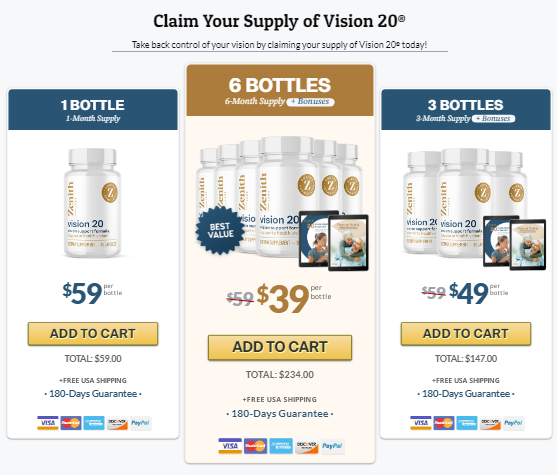
- Vision 20: Typically $49 per bottle, with discounts on multi-bottle bundles.
- PreserVision AREDS 2: Around $35–40 per bottle, but highly specific to AMD.
- Ocuvite: Around $20–30, but lower potency.
- Lutenol: Around $45–50, similar pricing to Vision 20 but fewer antioxidant extras.
- Generics: $15–20, but weak formulations.
✅ Best Value in 2026: Vision 20 gives the most balanced blend of potency, quality, and price.
👉 Don’t wait — Order Vision 20 from the Official Site
Final Verdict: What Sets Vision 20 Apart in 2026
After comparing Vision 20 with PreserVision, Ocuvite, Lutenol, and generic eye vitamins, here’s the bottom line:
- Vision 20 is the most well-rounded option for people looking for comprehensive eye protection in 2026.
- It goes beyond AMD-focused formulas by addressing blue light, oxidative stress, glare sensitivity, and long-term retinal health.
- With science-backed ingredients, positive customer reviews, and a safe dosage profile, it provides an excellent balance between effectiveness and safety.
👉 Bottom Line: If you’re looking for a supplement that doesn’t just target one condition but instead supports overall eye health in the modern digital age, Vision 20 stands apart from the competition.
👉 Don’t wait — Order Vision 20 from the Official Site