The Brain Song vs Meditation and Binaural Beats – What’s the Difference?
Feeling confused by the many ways to boost memory, focus, and mental clarity — from specialized audio programs to meditation or binaural beats? The Brain Song markets itself as a neuroscience-inspired audio tool designed to enhance cognition quickly and easily. Meanwhile, meditation and binaural beats take different approaches, each with their own techniques and claimed benefits.
So what really sets them apart, and which is more effective for your brain? In this comparison, we’ll explore how The Brain Song works versus meditation and binaural beats, examine the research behind each, highlight potential pros and cons, and help you decide which method fits your goals and lifestyle best.
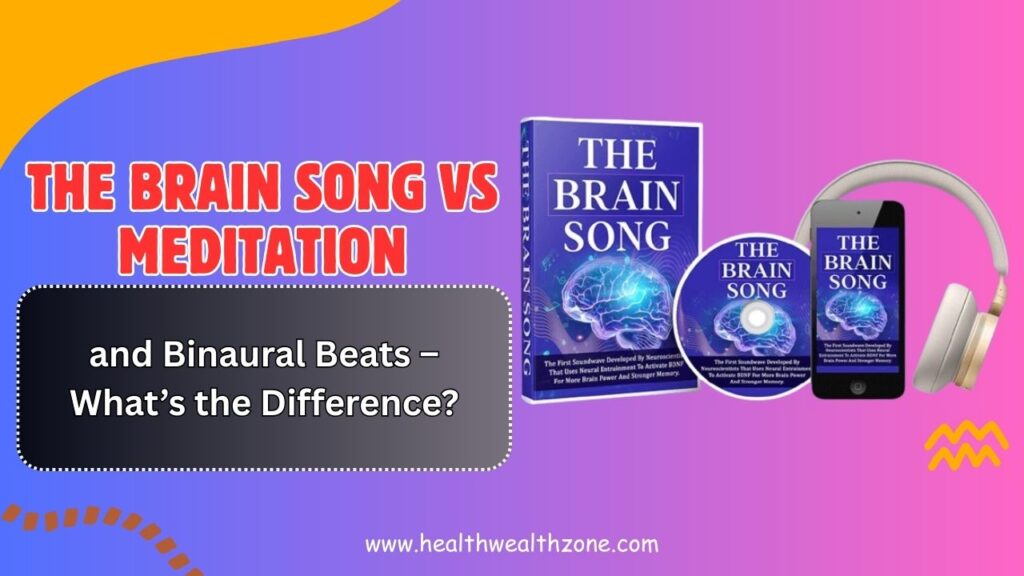
What Is The Brain Song?
The Brain Song is an audio-based program designed to enhance cognitive performance, particularly memory, focus, and clarity. Instead of relying on pills or supplements, it uses sound frequencies and auditory stimulation techniques — similar to brainwave entrainment — to guide your brain into states linked with sharper thinking and learning.
The program is typically structured and requires regular listening. Users claim that it helps them recall information faster, stay focused during study or work, and reduce mental fatigue.
Claims of The Brain Song include:
- Boosting memory recall and retention
- Enhancing focus and concentration
- Supporting relaxation and reduced stress
- Improving productivity without drugs or stimulants
What Is Meditation?
Meditation is an ancient practice of training the mind to focus, calm itself, and gain awareness. It doesn’t rely on sound or supplements; instead, it uses techniques like breathing, visualization, or mindfulness.
Benefits of meditation include:
- Stress reduction and emotional balance
- Improved working memory and attention span
- Lower anxiety and depression levels
- Better sleep and long-term brain health
Unlike The Brain Song, meditation requires mental discipline and consistent practice. It may take weeks or months to experience noticeable results, but research consistently shows lasting positive changes in the brain.
What Are Binaural Beats?
Binaural beats are an auditory illusion created when you hear two slightly different sound frequencies in each ear. Your brain processes the difference as a third “beat” frequency, which is believed to encourage specific brainwave states.
For example:
- Delta beats (0.5–4 Hz): Deep sleep, relaxation
- Theta beats (4–8 Hz): Creativity, meditation, learning
- Alpha beats (8–14 Hz): Calm focus, reduced stress
- Beta beats (14–30 Hz): Alertness, concentration
Binaural beats are popular for relaxation, focus, and sleep enhancement, but scientific results are mixed. Some users feel calmer and more focused, while others notice little effect.
Why People Compare The Brain Song to Meditation and Binaural Beats
It’s natural to compare these three approaches because they all target mental performance and stress reduction but in different ways:
- The Brain Song = structured audio program designed for memory and focus.
- Meditation = ancient, discipline-based practice for long-term brain and emotional health.
- Binaural Beats = simple auditory tool for short-term brainwave entrainment.
But are they equal? Or does one outperform the others? Let’s dig deeper.
Scientific Backing: Which Has the Most Evidence?
The Brain Song
- Relatively new in the market, so direct clinical research is limited.
- Built on principles of brainwave entrainment and frequency-based audio, which have shown promise in studies.
- User reports often highlight improved focus, clarity, and recall — though results vary.
Meditation
- Backed by decades of research and thousands of studies.
- Proven to reduce stress, enhance memory, and even change brain structure (like thickening the hippocampus, linked to learning).
- Benefits are consistent and long-term with regular practice.
Binaural Beats
- Mixed evidence: some studies show modest improvements in focus, mood, or sleep, others show minimal or placebo-like effects.
- Works best when used with good headphones, correct frequencies, and consistent listening.
✅ Verdict: Meditation has the strongest scientific foundation. The Brain Song and binaural beats are promising, especially for short-term effects, but research is less robust.


How Each Works in Daily Life
The Brain Song
- Simple: just listen to structured tracks.
- Can be used while studying, relaxing, or preparing for important tasks.
- More passive than meditation but requires regular use.
Meditation
- Requires active participation: sitting quietly, focusing on breath, observing thoughts.
- Takes practice and patience but offers lasting results.
- Flexible: can be done anywhere without equipment.
Binaural Beats
- Requires headphones and the right audio files.
- Easy to use during relaxation or focus sessions.
- Works quickly but effects may not last long.
Customer Reviews and Experiences
The Brain Song
Positive:
- Many users report sharper focus and easier recall of information.
- Students claim better study performance.
- Some say it helps reduce mental fatigue during work.
Negative:
- Results may take weeks; not instant.
- Some users find the effects subtle.
- Requires good listening environment.
Meditation
Positive:
- Users experience deep calm, clarity, and emotional balance.
- Benefits often extend beyond sessions into daily life.
- Seen as a lifestyle practice with long-lasting effects.
Negative:
- Hard for beginners; staying consistent is challenging.
- Results may take time to appear.
Binaural Beats
Positive:
- Immediate sense of calm and focus for many users.
- Good for sleep and relaxation.
- Easy and low effort.
Negative:
- Some report no noticeable effect.
- Quality of audio matters a lot.
- Effects may wear off quickly.
Safety and Side Effects
- The Brain Song: Generally safe, though some users report mild headaches or ear strain if used at high volume.
- Meditation: Very safe, but some may feel emotional discomfort when starting (unprocessed thoughts surfacing).
- Binaural Beats: Safe for most, but those with seizure disorders should consult a doctor before use.
Comparing Them Head-to-Head
| Factor | The Brain Song | Meditation | Binaural Beats |
|---|---|---|---|
| Ease of Use | High – just listen | Low – requires discipline | High – just listen with headphones |
| Scientific Backing | Limited but promising | Very strong | Mixed, moderate |
| Cost | Paid program | Free (or low-cost apps) | Free or low-cost |
| Time to Results | Weeks of use | Weeks to months | Immediate, but short-term |
| Best For | Memory & focus support | Long-term cognitive & emotional health | Relaxation, short-term focus, sleep |
Where to Buy The Brain Song & Current Pricing (2026 Update)
Here’s the latest official pricing:
| Package | Price | Access | Shipping | Guarantee |
|---|---|---|---|---|
| The Brain Song | $39 | Instant Access | Digital Product – No Shipping | 90-Day Money-Back Guarantee |
✅ All The Brain Song packages come with a 90-day money-back guarantee.
👉 Don’t wait — Check Brain Song’s Official Offer
Final Verdict: The Brain Song vs Meditation and Binaural Beats – What’s the Difference?
If you’re exploring ways to improve relaxation, concentration, or mental clarity, you may be wondering how The Brain Song compares with meditation and binaural beats. Each approach offers a different listening or mindfulness experience, making it helpful to understand which one best matches your preferences and daily routine. The Brain Song may appeal to people who prefer a structured, audio-based program, while meditation offers a mindfulness practice and binaural beats provide an auditory experience designed around differences in sound frequencies. All three can be explored as part of a personal wellness routine, depending on whether you prefer guided audio, quiet reflection, or specialized sound.
Meditation can help people practice attention and manage stress, while some listeners find binaural beats relaxing or useful for creating a focused environment. The Brain Song’s potential benefits depend on its specific methods and the evidence supporting its claims about memory, focus, or brainwave activity. Individual experiences vary, so choosing an approach that feels comfortable and fits your lifestyle is important. If you’re interested in trying The Brain Song, checking the official website for program details, listening instructions, available packages, and purchasing terms is a sensible next step. Review what’s included and verify any applicable money-back guarantee before ordering, while maintaining realistic expectations about what any audio-based approach can achieve.