Is Easy Battery Fix Safe? – Risks, Warnings, and Who Should Avoid It
Worried about whether Easy Battery Fix is safe to use? When working with batteries, it’s important to understand possible risks, safety warnings, and situations where attempting a restoration may not be appropriate. But what hazards should you know about, and are there certain batteries or users who should avoid this process?
In this detailed guide, we’ll examine Easy Battery Fix safety, potential risks, important warnings, battery types to avoid, basic precautions, and situations where professional help may be the safer choice.
👉 Don’t wait — Order Easy Battery Fix now from the Official Site
What Exactly Is Easy Battery Fix?
Easy Battery Fix is a digital battery-reconditioning program, not a physical repair device.
The program’s official materials describe a Battery Reset Sequence, a quick battery check, setup instructions, safety information, troubleshooting guidance, and other educational resources intended to help users evaluate and potentially restore suitable batteries.
That distinction is important.
Buying Easy Battery Fix doesn’t mean you’re purchasing a charger, battery tester, replacement cells, or professional repair equipment. You’re purchasing information intended to guide the process.
The official sales page also states that the program is designed to work with common battery types and emphasizes testing before attempting restoration.
👉 Don’t wait — Order Easy Battery Fix now from the Official Site
Is Easy Battery Fix Safe to Use?
The program itself is educational, but the battery procedures it teaches can involve real physical risks.
Battery safety isn’t simply about following instructions. You also need to determine whether the battery is appropriate to work on in the first place.
Potential hazards can include:
- Electrical shorts and burns
- Battery acid exposure
- Hydrogen gas during lead-acid charging
- Excessive heat
- Fire
- Damaged battery cells
- Chemical exposure
OSHA requires appropriate ventilation in areas where certain batteries are charged because gases can accumulate and create explosive mixtures. It also specifies protective measures when handling batteries and electrolytes.
Therefore, Easy Battery Fix should be treated as an educational resource, not as a guarantee that every battery can safely be repaired at home.
What Are the Main Easy Battery Fix Risks?
Electrical Shock and Short Circuits
Even relatively small batteries can deliver substantial current.
A short circuit can rapidly generate heat, sparks, or burns. Incorrect polarity or unsuitable charging equipment can also damage the battery or connected equipment.
For that reason, users should understand basic electrical safety before attempting battery work.
Battery Acid Exposure
Traditional lead-acid batteries contain sulfuric-acid electrolyte. Contact with the electrolyte can cause serious chemical burns.
OSHA recommends appropriate protective equipment and facilities for handling batteries and acids, including eye and skin protection.
This is one reason battery restoration shouldn’t be treated like a simple household DIY project.
Hydrogen Gas During Charging
Hydrogen gas is another major concern with lead-acid batteries.
During charging, hydrogen can accumulate in poorly ventilated spaces. If an ignition source is present, accumulated hydrogen can create an explosion hazard. OSHA specifically recommends adequate ventilation and preventing open flames, sparks, and electrical arcs around battery-charging areas.
Heat and Fire
Batteries can become hot when charging or when something goes wrong internally.
This is particularly important with lithium-ion batteries. The Consumer Product Safety Commission has documented cases where defective lithium-ion battery products overheated, ignited, and caused serious fire and burn hazards.
If a battery becomes unusually hot, swells, smokes, or behaves abnormally, stop using it rather than trying to push through the process.
Which Batteries Should You Avoid Reconditioning?
Not every battery described as “dead” is a good candidate for DIY restoration.
Swollen Lithium-Ion Batteries
A swollen lithium-ion battery should be treated as damaged.
Don’t attempt to puncture it, compress it, open it, or apply an experimental reconditioning procedure. Damaged lithium-ion cells can present serious overheating and fire risks.
Leaking Batteries
A leaking battery presents both chemical and electrical hazards.
Don’t handle leaking electrolyte casually, and don’t assume a leaking battery can be safely restored.
Cracked or Physically Damaged Batteries
Visible cracks, punctures, severe dents, or other physical damage can indicate compromised internal components.
Such batteries are poor candidates for a home restoration experiment.
Batteries Showing Excessive Heat
If the battery becomes unusually hot during charging or testing, stop the procedure.
Excessive heat may indicate an internal problem that requires professional evaluation.
Who Should Avoid Easy Battery Fix?
Easy Battery Fix may be less appropriate for people who have little experience working with electrical equipment.
Complete Beginners
If you don’t know how to identify battery polarity, measure voltage, or use a multimeter safely, it’s better to learn those basics before attempting restoration.
People Without Suitable Equipment
Using improvised chargers, damaged cables, or unsuitable testing equipment can increase the risk of accidents.
Anyone Working in a Poorly Ventilated Area
Lead-acid batteries may release gases during charging, so ventilation is particularly important. OSHA specifically requires adequate ventilation in relevant battery-charging environments.
People Handling Damaged Lithium Batteries
Swollen, leaking, punctured, or severely damaged lithium-ion batteries should not be treated as ordinary DIY projects.
If you’re unsure whether a battery is safe, professional assessment is the better option.

How to Use Easy Battery Fix More Safely
If you decide to use the program, start with inspection and identification—not restoration.
1. Identify the Battery Chemistry
Determine whether the battery is lead-acid, lithium-ion, NiMH, or another chemistry.
Never assume the same procedure applies to every rechargeable battery.
2. Inspect It Carefully
Look for swelling, cracks, leakage, corrosion, unusual odors, or other visible problems.
If the battery appears damaged, stop.
3. Use Correct Equipment
Use a charger and testing equipment appropriate for the specific battery chemistry and specifications.
4. Choose an Appropriate Location
For lead-acid charging, adequate ventilation is essential because of the potential buildup of hydrogen gas. Keep sparks, flames, and other ignition sources away from the charging area.
5. Don’t Leave a Problematic Battery Unattended
Monitor the battery during charging and stop if it becomes excessively hot, swells, leaks, smokes, or otherwise behaves unexpectedly.
What Safety Features Does Easy Battery Fix Include?
One positive aspect of the program is that its sales page explicitly advertises Safety & Testing Protocols as part of the package. It also says the guide teaches users how to determine what is recoverable and how to avoid damaging batteries.
Safety Notes
The program includes safety information alongside its battery-reconditioning instructions.
Testing Guidance
It promotes a quick check before restoration, which is important because not every battery is suitable for reconditioning.
Troubleshooting
A troubleshooting checklist is also included for cases where the expected results aren’t achieved.
Still, these features shouldn’t replace battery-manufacturer instructions, established safety practices, or professional advice when dealing with hazardous conditions.
Easy Battery Fix Pricing & Current Offer
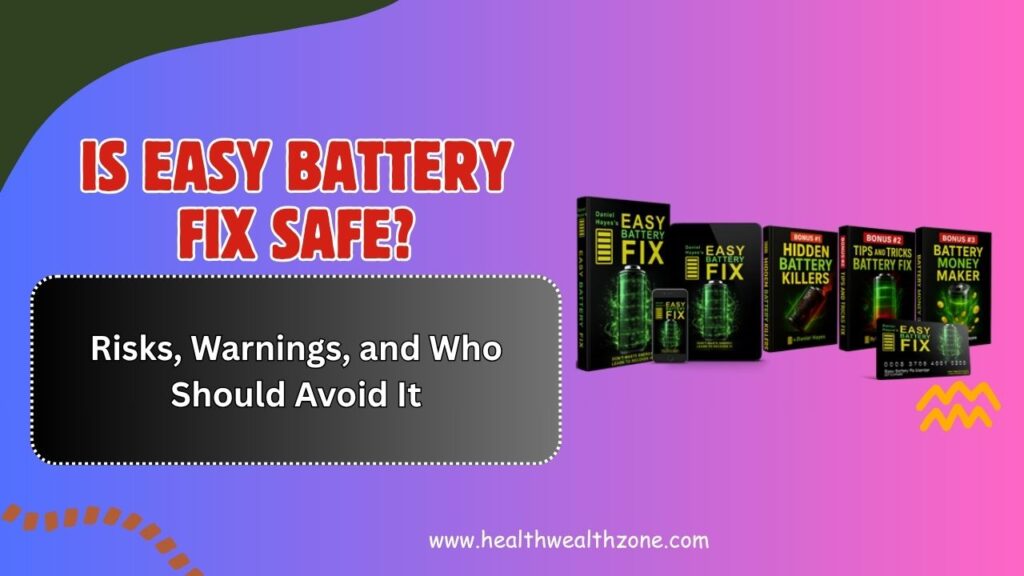
The pricing screenshot provided for this article shows Easy Battery Fix advertised at $49. The package includes the main digital program and three bonus resources, with an advertised combined value of $149.
| Package | Price | Total Price | Supply | Bonuses |
|---|---|---|---|---|
| Easy Battery Fix | $49 | $49 | Lifetime Digital Access | Main Battery Fix Program |
| Bonus #1 | Included | $0 | Lifetime Digital Access | Hidden Battery Killers |
| Bonus #2 | Included | $0 | Lifetime Digital Access | Tips and Tricks Battery Fix |
| Bonus #3 | Included | $0 | Lifetime Digital Access | Battery Money Maker |
| Complete Package | $49 | $49 | Lifetime Access | 🎁 $149 Advertised Value |
The promotional offer also advertises a 60-day money-back guarantee. Always verify the current price and terms before completing your purchase.
👉 Don’t wait — Order Easy Battery Fix now from the Official Site
Is Easy Battery Fix Safe for Everyone?
No—and that’s an important distinction.
The program may be useful for someone with basic electrical knowledge who is working with an appropriate battery in a suitable environment. But it isn’t a universal solution for every battery or every user.
Potentially Suitable For
- DIY enthusiasts with basic electrical knowledge
- Users working with suitable rechargeable batteries
- People who can identify battery chemistry
- Users with appropriate testing and charging equipment
- People willing to follow safety procedures carefully
Better Left to Professionals
- Swollen lithium-ion batteries
- Leaking batteries
- Cracked or severely damaged batteries
- Batteries that become extremely hot
- Large industrial battery systems
- Situations where the battery’s chemistry or condition is unknown
When there is uncertainty, professional assistance is usually a better choice than taking a safety risk to save money.
Final Verdict: Is Easy Battery Fix Safe? – Risks, Warnings, and Who Should Avoid It
If you’re considering Easy Battery Fix to improve battery performance, extend battery life, or troubleshoot power-related problems, it’s important to understand what the product or program actually involves before making a purchase. Battery-related solutions can range from software adjustments to repair instructions, and their safety depends on the methods recommended and the device being used. Easy Battery Fix may be worth exploring as a troubleshooting option if its instructions are appropriate for your device and you understand the potential limitations. However, without verified details about the specific product, it would be premature to conclude that it is completely safe, that it will restore battery capacity, or that it works for every device.
Before using Easy Battery Fix, review the provider’s instructions, compatibility requirements, refund terms, and any permissions or software installation requests. Avoid procedures that involve opening a battery, bypassing safety protections, applying excessive heat, or using unverified charging methods, as these can create serious risks. If you’re considering purchasing Easy Battery Fix, check the latest product details and purchase terms on the official website before ordering, and verify any advertised money-back guarantee. For devices with swollen batteries, unusual heat, leakage, or physical damage, stop using or charging the device and seek assistance from a qualified repair professional. A careful review of the product and your device’s condition can help you make a safer, more informed decision.
👉 Don’t wait — Order Easy Battery Fix now from the Official Site